Start with the wording
Write the text first. One short line (a name or "PANEL A") fits a small label; three lines (name, title, room) need a taller plate. The Label Designer shows exactly how your words fit each size, so try two sizes and compare.
Think about reading distance
Labels read up close (breakers, toolboxes) can be small with small text. Labels read across a room (door signs, panel IDs, equipment numbers) need bigger letters, which means a bigger plate. When in doubt, go one size up for anything read from more than an arm's length away.
Common sizes as a starting point
- Breaker and device labels: 1" x 2.5" or 1" x 3"
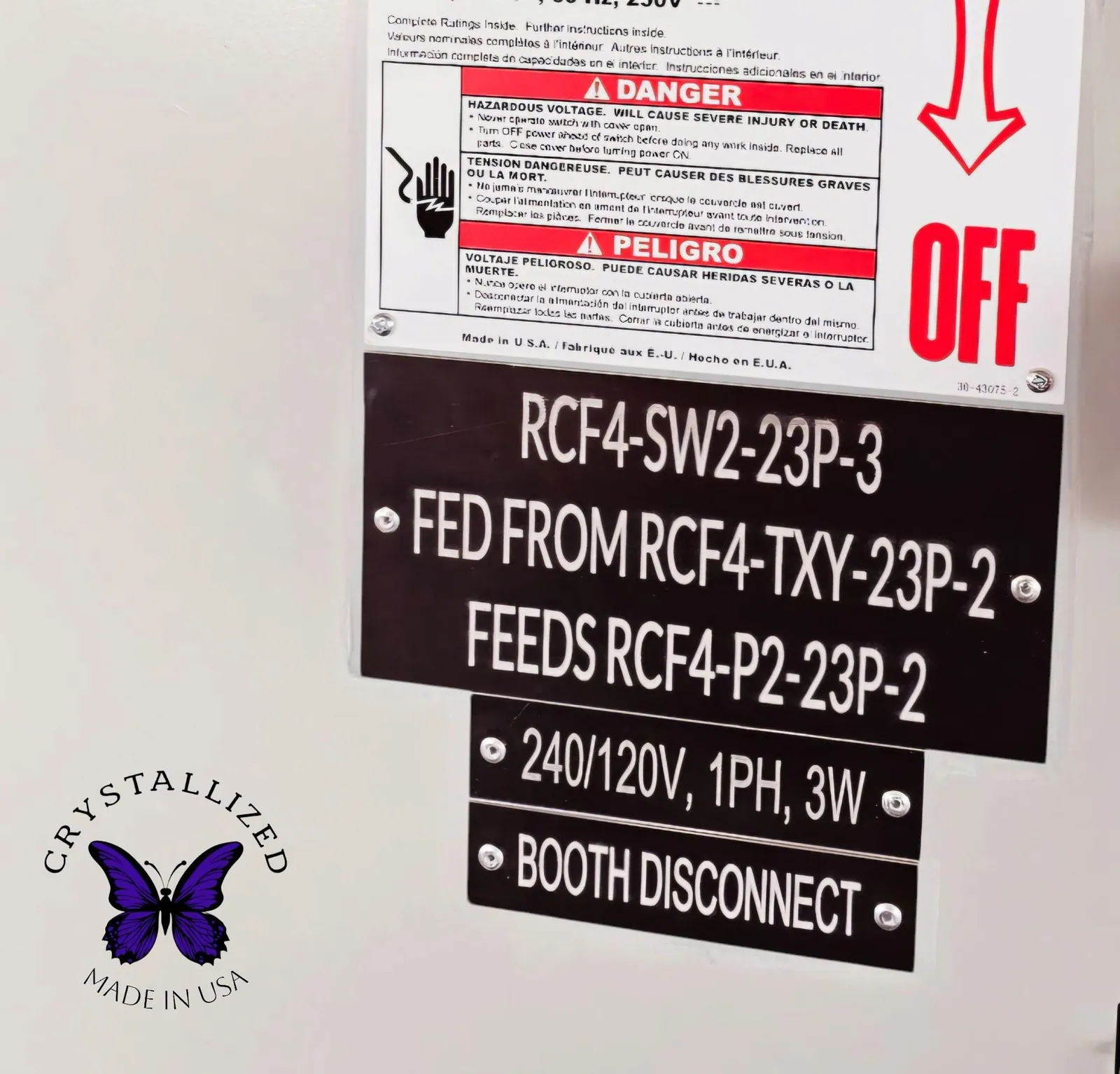
- Panel and disconnect IDs: 2" x 4" to 3" x 6", depending on how many lines
- Equipment nameplates: 1.5" x 3" to 2" x 6"
- Desk and door name plates: about 2" x 8" or 2" x 10" for a name and title
- Valve tags: 1.5" or 2" round for a number plus a short line; oval or gable tags for more text (valve tags)
Leave some breathing room
Text that runs edge to edge looks crowded and is harder to read. A little margin around the words looks more professional, and mounting holes need space at the ends.
Match what is already there
Replacing or adding labels in an existing building? Measure an existing label and match its size and colors so everything looks consistent.
Prices for every size are in how much engraved labels cost. Shopping for an office? See name plates and name tags.